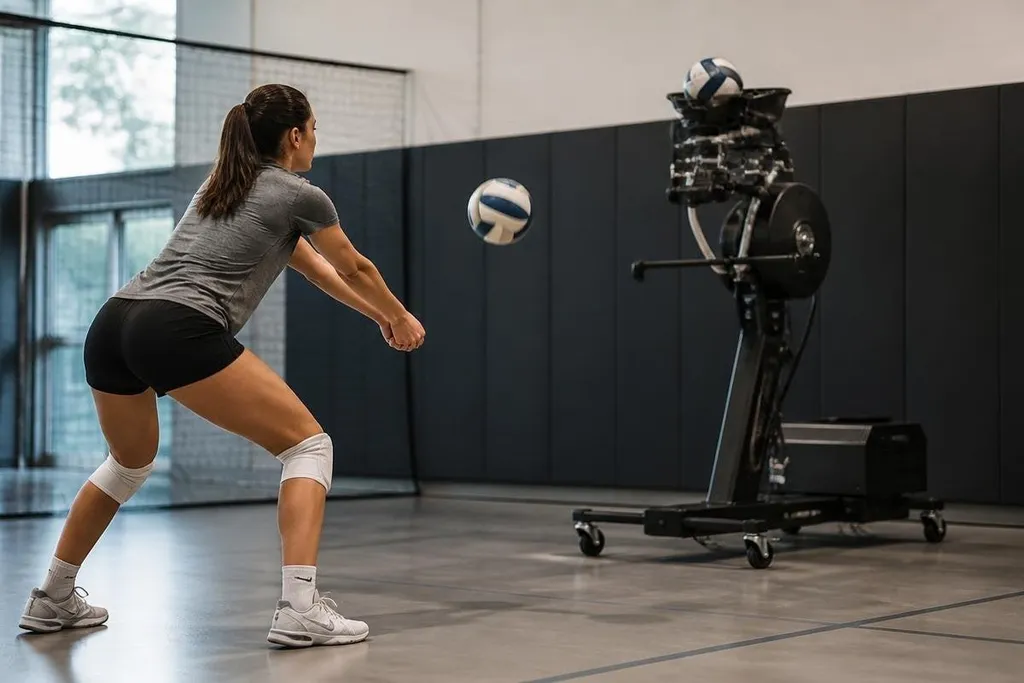
A sports robot can repeat the same movement for hours without changing speed, load, or position. That gives coaches a controlled way to train a skill, measure a response, or test recovery without asking an athlete to repeat every hard movement at full effort.
This matters most when training needs steady force and clear data. The useful question is where a robot adds control that a coach, machine, or training partner can't give alone.
- Repeatable drills with the same timing and resistance
- Sensors that record force, motion, and contact
- Extra support during recovery and return-to-play work
Repeating movement without adding guesswork
Many training drills depend on repetition. A robotic arm, resistance system, or moving target can follow the same path each time, so the athlete faces a known task instead of a partner who changes speed between attempts.
That control helps with technique. If the athlete's foot, hand, or body moves away from the target position, the coach can compare the motion with earlier attempts. Motion capture records position over time, while force sensors record how hard the athlete pushes or pulls.
The machine still needs a coach beside it. A repeated movement can reinforce poor form if the setup is wrong, and a sensor can record a number without explaining why the movement changed.
Measuring force, balance, and fatigue
Sports robots can link physical training with measurement. A robotic resistance unit can record torque, which is the turning force at a joint. A treadmill with a force plate can show how an athlete loads each foot during a step or landing.
Those details help a coach see changes that may be hard to spot from the side of a court. A player might finish a drill at the same speed while placing more load on one leg, or a runner might shorten one stride as fatigue grows.
The useful result is a record that can be compared across sessions. The value depends on the sensor setup, calibration, and task design, so a number should guide a training decision rather than replace one.
Supporting recovery and return to play
Rehabilitation is another area where controlled machines can help. A robot can guide a limb through a set path, apply measured resistance, or reduce part of the load during walking practice. That lets the athlete work on movement before they can handle full body weight or normal game speed.
The machine's limits matter here. Recovery is not a fixed software setting. Pain, swelling, balance, and confidence can vary between sessions, so a clinician must adjust the task when the athlete's response changes.
I'd use a sports robot as a measurement and repetition tool, not as the coach making the final call.
What sports robots still can't show
A controlled drill can tell you how an athlete handles that drill. It can't fully predict a match, race, or uneven training session where timing and movement change without warning.
The gap comes from context. A robot may control resistance and speed, but an opponent changes direction, a surface may shift, and an athlete must choose what to do before the next movement is clear.
Training systems need to show how their data relates to those conditions before coaches use it for selection or return-to-play decisions.
Cost and setup also shape the result. A system with motion capture, force plates, and a robotic actuator needs space, staff, calibration, and a clear plan for reading the data.
The useful test is whether the robot changes a coach’s decision about training load or timing. Reports at Robot24.com can place that result beside setup demands before you compare prices.
A practical check before buying
A sports club or performance lab can use this checklist before adding a robot to training:
- Name the movement the system must repeat, then define the speed, load, and range.
- Check which sensors record force, position, balance, or timing.
- Ask how staff calibrate the system and how often that check is required.
- Set a human review point for pain, fatigue, or a change in form.
- Compare the machine's drill with the sport task it is meant to support.
- Record the staff time, floor space, and maintenance the system needs.
The strongest use cases will be the ones with a clear task, a repeatable setup, and data that changes what the coach does next. The open question is how well these systems can carry that control from the training room into the unpredictable moments that decide sport.